One holiday park. Three languages. A website that grows with it.
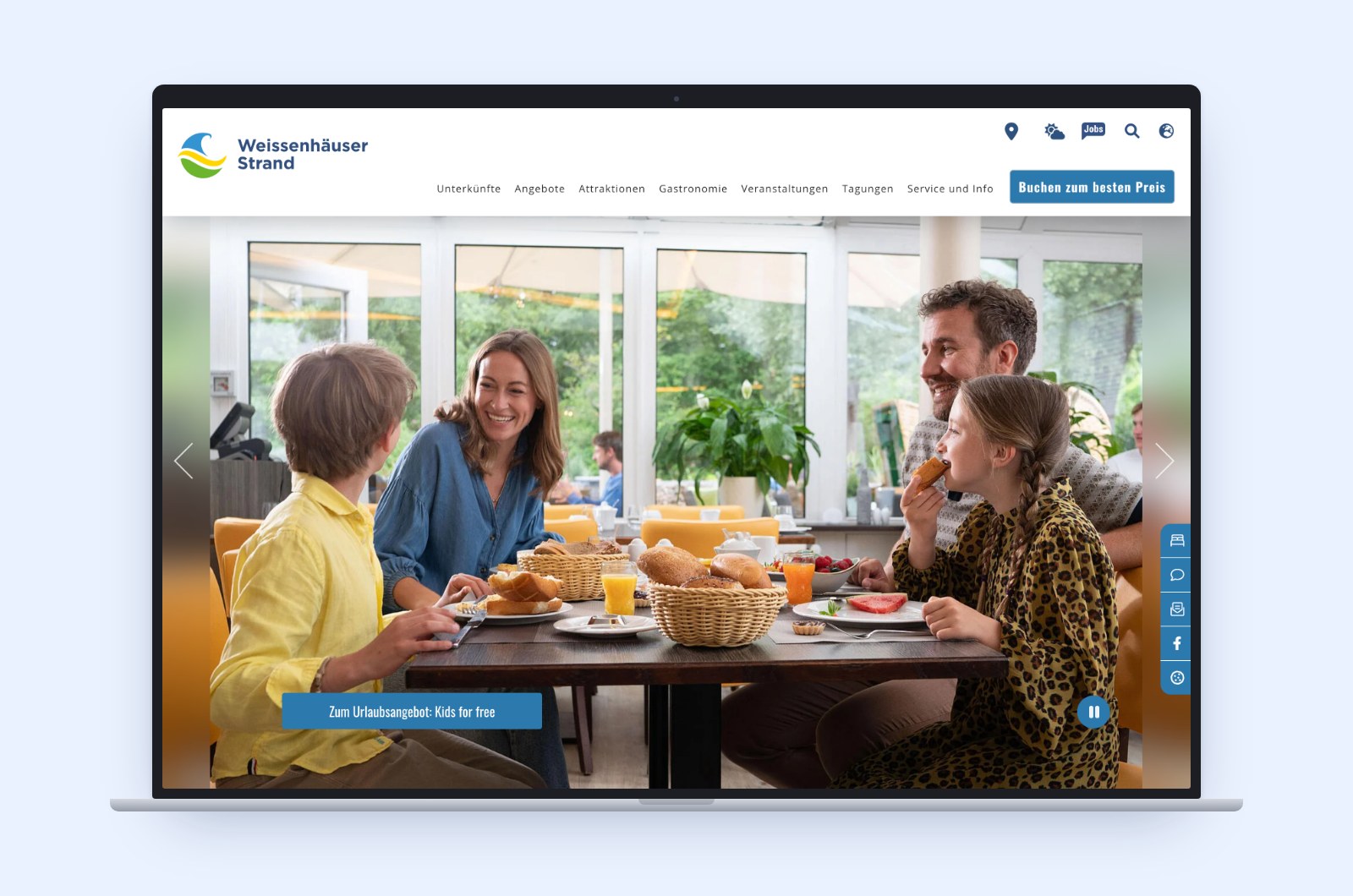
For Weissenhäuser Strand, we redesigned and technically rebuilt the website in 2022. Generous images, the colours of the holiday park and recurring offer building blocks combine holiday atmosphere with orientation. Holiday flats, hotel, attractions, restaurants and events thus find their place on a shared website – in German, English and Danish. Since the relaunch, we have been continuously developing the design, functions and technical basis further.
An entire holiday park under one digital address.
Weissenhäuser Strand combines a holiday park and a beach hotel. Holiday flats, hotel rooms, the Abenteuer Dschungelland, the Subtropisches Badeparadies, restaurants and events are aimed at different target groups with different interests.
This variety also had to come together in the design: guests should look forward to their stay and at the same time find their way between accommodation, leisure offers and events. The existing brand identity formed the framework for this; we developed the web design to suit the different content and paths through the website.
The existing website had become technically dated and could only be used to a limited extent on modern devices. Much content was maintained on individual pages and had to be updated in several places.
Added to this was another important interface: the actual booking takes place on an externally operated platform. The website must therefore reliably guide guests from the suitable offer into the respective booking process – in all three languages.
The relaunch was the beginning.
Since the relaunch in September 2022, we have been developing the platform further together with Weissenhäuser Strand. The following points cover both the rebuild and later additions.
Structure and design
Based on the existing brand identity, we developed the web design: from the image-rich entry pages to offer overviews and detail pages. Recurring building blocks and clear proportions connect the different areas. The layouts were worked out for smartphone, tablet and desktop.
Central data models
Accommodation, attractions and events were transferred from static pages into structured data records.
Search in three languages
A Solr search opens up the extensive content and sorts the results by relevance.
Developing existing connections further
We extended existing connections to the booking platform, online ordering and newsletter system in a targeted way. These include checks for valid offer links, content depending on the order status and additional data transmission from forms.
Ongoing operation
In addition to regular security updates, we updated the platform to TYPO3 12 in 2025.
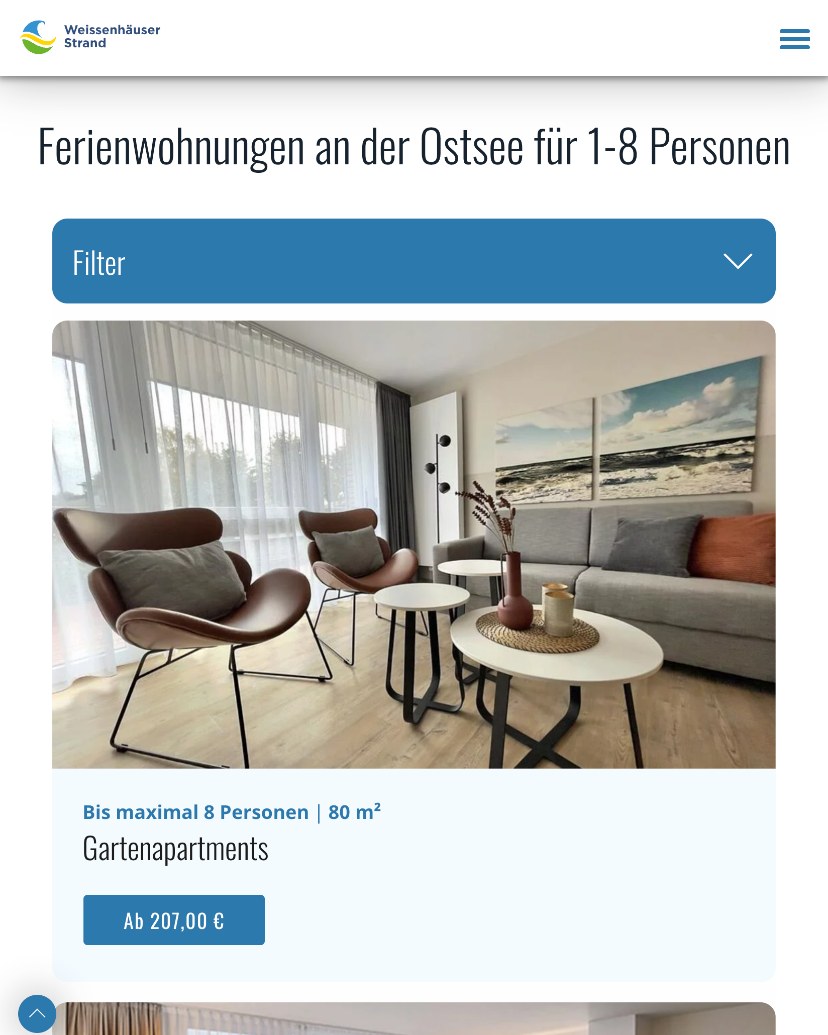
Filter and compare — also on the go.
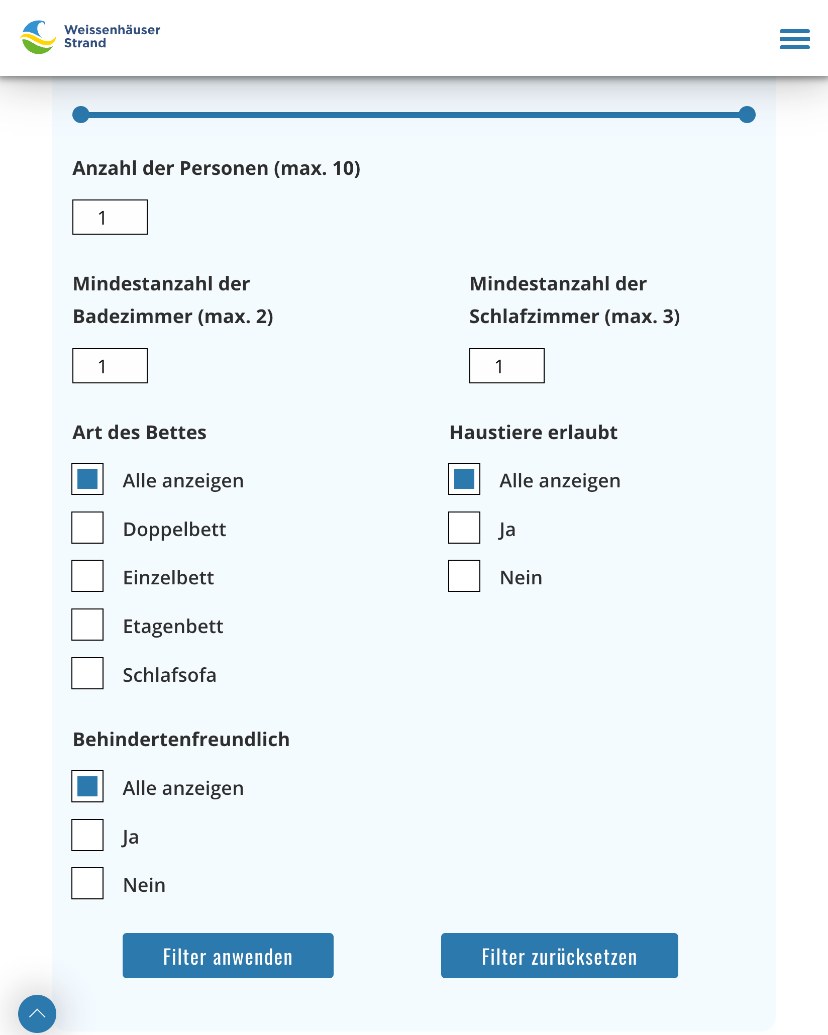
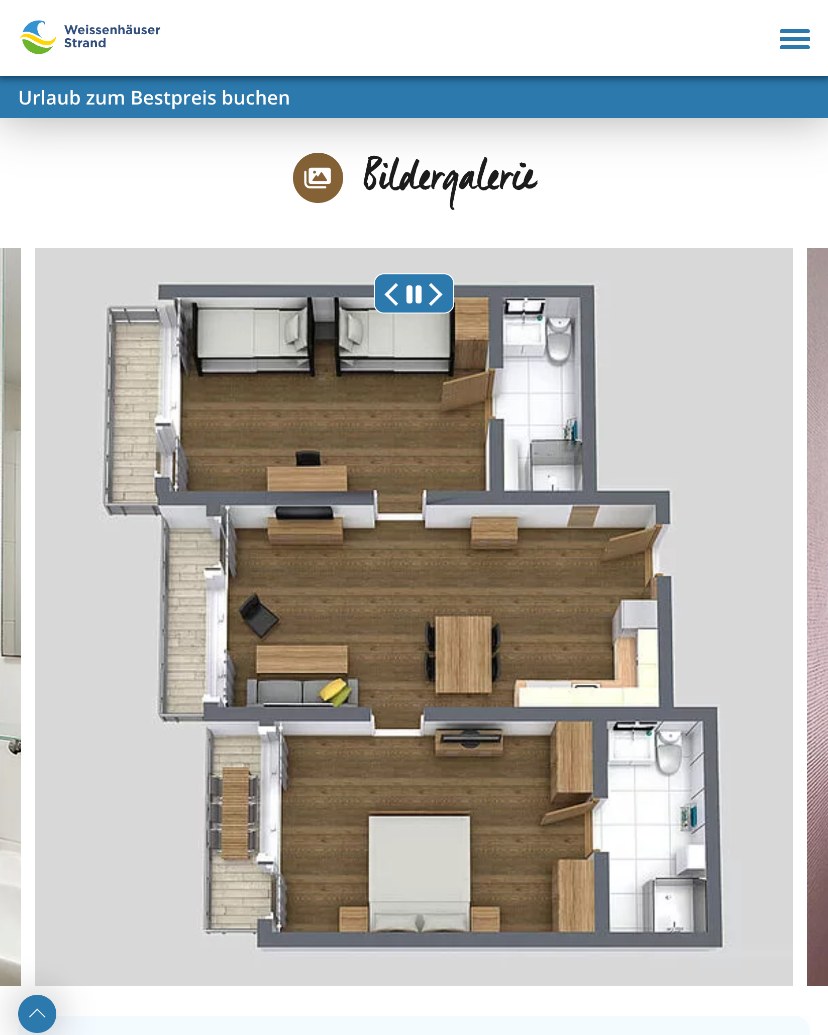
Show holidays. Arrange offers clearly.
Generous images give insights into accommodation, leisure offers and life in the holiday park. Added to this are shades of blue and sand as well as other colours from the existing brand identity. Light areas give the information room; buttons highlighted in colour show the next steps to offers and booking.
We combined these elements into a shared web design. Recurring image-text areas, offer tiles and fixed spacing give the different content a recognisable connection. This allows holiday flats, hotel and attractions to show their own character without looking like separate websites.
The typography combines striking headings with easily readable information texts. Handwritten accents complement the relaxed holiday character. In ongoing development, we also take contrasts and the usability of the elements into account.
The fonts are integrated locally; no connection to external font providers is required when loading the font files.
Baltic Sea, holiday park, three languages.
Long descriptions of accommodation, attractions and events that are easy to read.
For individual handwritten accents.
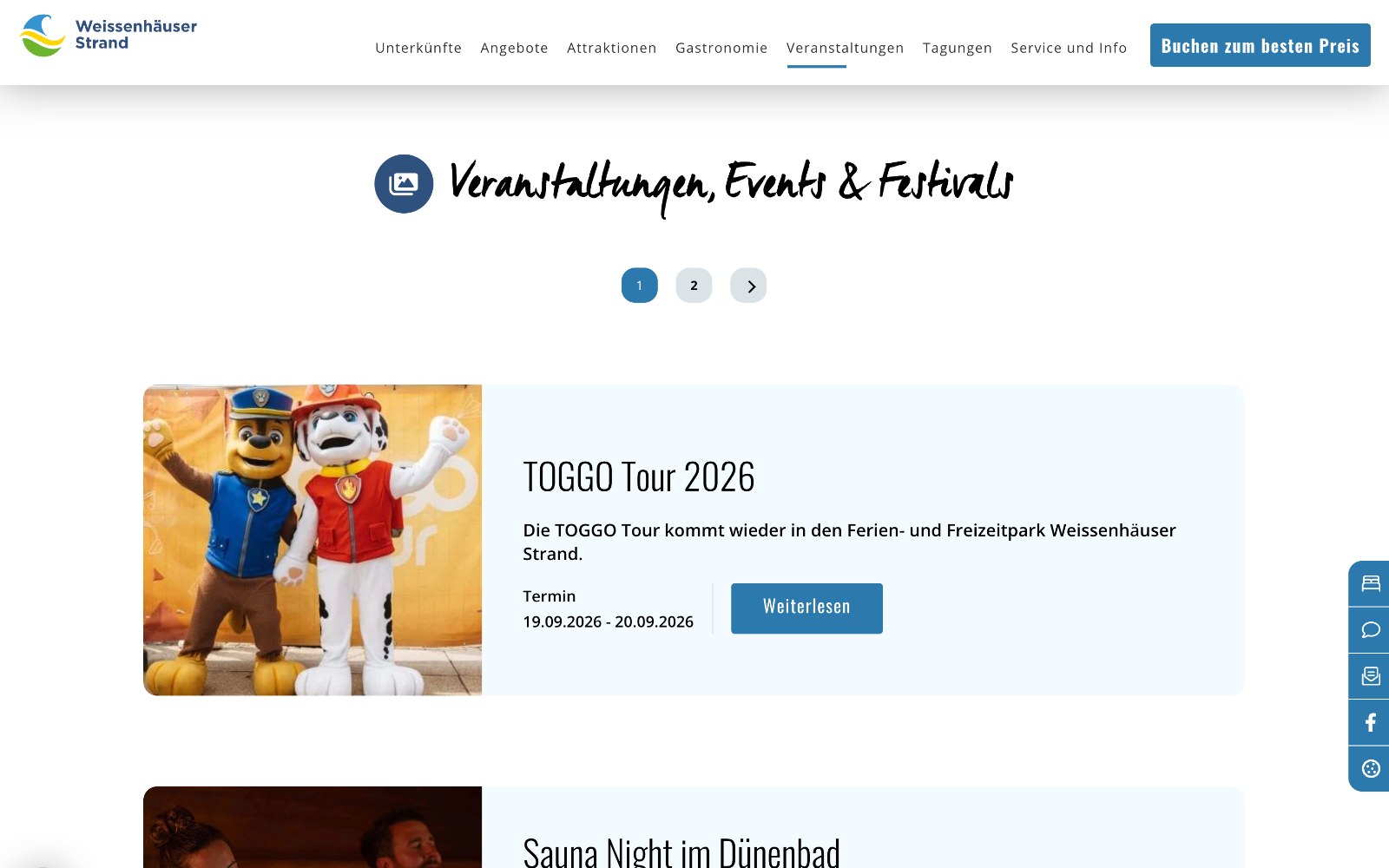
Maintain offers centrally, display them in several places.
An accommodation appears in several places on the website: in overviews, on its detail page, in the site map and in the search. With separate maintenance, changes would have to be made several times.
That is why we developed our own data model. Images, features and other information are maintained centrally and used in the respective views. Language-dependent content is edited in the corresponding language versions.
This means the editorial team does not have to update the same information again for every display.
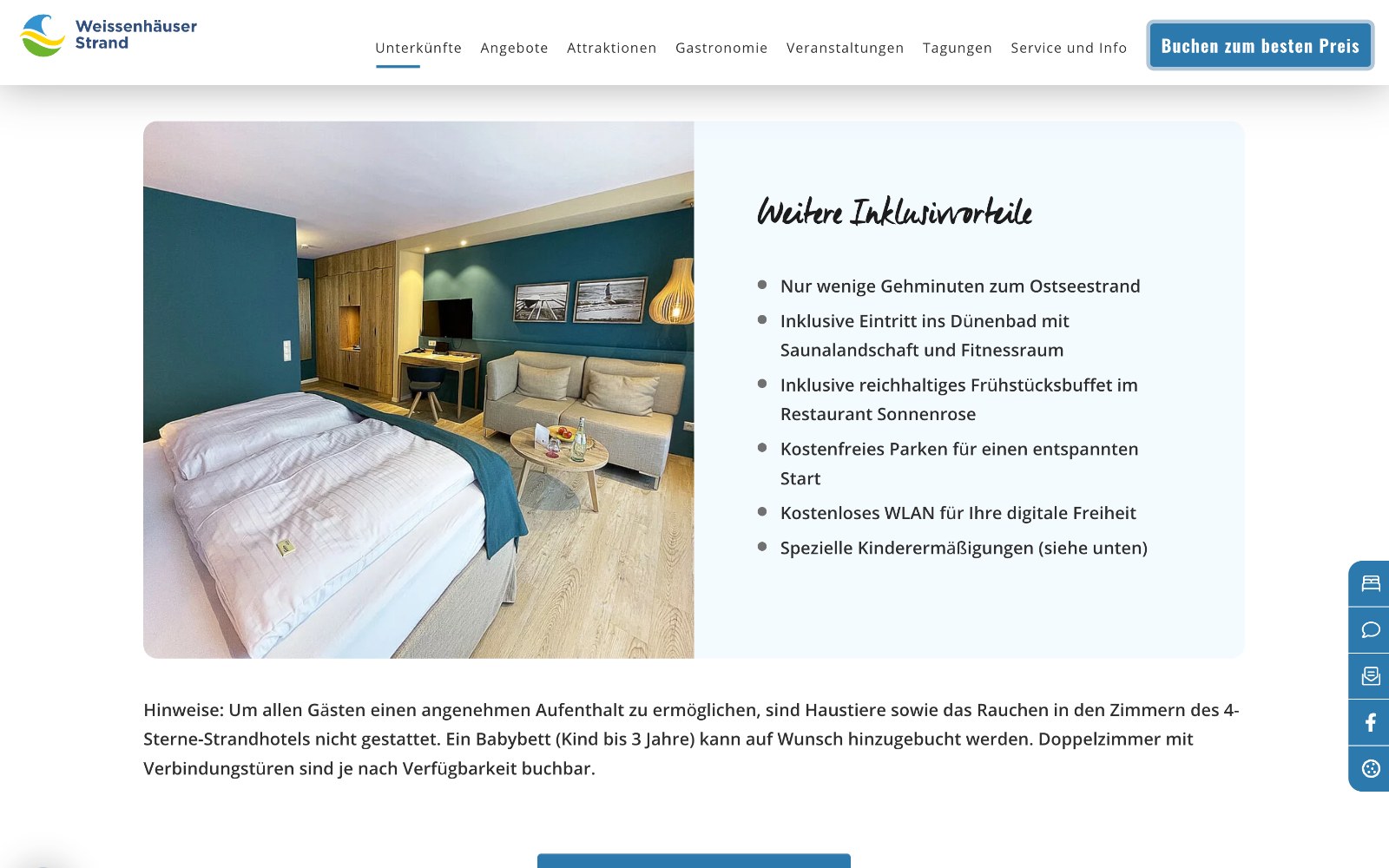
Use external information directly in TYPO3.
The booking platform and other external services were already in use. We developed their integration further and added functions that make information from these systems usable within the website.
For example, TYPO3 checks whether external online ordering is open and shows guests different content depending on this. Another check compares linked offers with the booking platform and reports when an offer has expired there. This helps the editorial team keep the links up to date.
We also extended the existing newsletter connection: when certain forms are submitted, additional information is transmitted to the external system.
In addition, we implemented the travel period calendar from the catalogue in TYPO3. For regional notices, pop-ups can be displayed after corresponding consent, based on an IP-based assignment to the federal state.
The framework in figures.
How we help with comparable projects.
Many offers. One shared website.
We combine web design with the right structure for extensive offers. This creates a website that shows your brand, gives visitors orientation and can be maintained in everyday use. We plan the required language versions and connections together with you. Discuss your project with us.


